
Ask An Expert
Our colorimeters are designed for water analytics, environmental monitoring, aquaculture, serial testing, and service laboratories with quality assurance, and they have six different wavelengths, full values of pH and ORP, and normative standard turbidity measurement. In addition to the stand-alone instrument, there is also a field set that can be purchased that includes an integrated "work-bench," accessories, and GLP-compliant data management. Visual or photoelectric colorimeters are both common types. Visual colorimeters can take the form of real visual colorimeters, colour comparators, visual absorption metres, or tristimulus colorimeters. Visual colorimeters work by contrasting the colour of the test sample with a known reference colour. Chemical analysis, determining concentration, and sorting products according to colour are all possible with the use of these devices. The manufacturing of coloured items is one of the most typical applications for a tristimulus colorimeter, which is based on the principle of visual equivalency and measures colour intensity. Photoelectric colorimeters are able to directly measure colours by utilising filters and photoelectric cells in their measurement process. In order for light reflected or transmitted from the object to reach the photon detectors, it must first pass through a number of filters.

| Wavelength Range: | 420 to 660 nm |
| Filter: | 420 nm , 470 nm ,530 nm ,620 nm , 660 nm |
| High stability and reproducibility: | ± 5 nm |
| Economy: | Consumes only 1.5ml of reagent |

| Color measurement method: | Color card |
| Illumination system: | 8°/d (diffusion illumination), SCI (spectral components included) |
| Display mode: |
Colorimetric values: L × a × b,L × C × h,△E × ab,XYZ,relative RGB values Color difference values: △(L × a × b),△(L × C × h) Whiteness values: hunter whiteness, Ganz whiteness Yellowness value: YI |
| Display screen: | 2.4 inch LCD display screen |

| Illumination system: | 8°/d (diffusion illumination), SCI (spectral components included) |
| Display mode: |
Colorimetric values: L × a × b,L × C × h,△E × ab,XYZ,relative RGB values Color difference values: △(L × a × b),△(L × C × h) Whiteness values: hunter whiteness, Ganz whiteness Yellowness value: YI |
| Display screen: | 2.4 inch LCD display screen |
| Measuring calibration: | About 8 mm |

| Characteristic function: | Camera viewing system for measurement |
| Illumination system: | 8°/d (diffusion illumination), SCI (spectral components included) |
| Display mode: |
Colorimetric values: L × a × b,L × C × h,△E × ab,XYZ,relative RGB values Color difference values: △(L × a × b),△(L × C × h) Whiteness values: hunter whiteness, Ganz whiteness Yellowness value: YI |
| Display screen: | 2.4 inch LCD display screen |

| Characteristic function: | Can precisely test pasty material, powders |
| Illumination system: | 8°/d (diffusion illumination), SCE (spectral components excluded) |
| Display mode: |
Colorimetric values: L × a × b,L × C × h,△E × ab,XYZ,relative RGB values Color difference values: △(L × a × b),△(L × C × h) Whiteness values: hunter whiteness, Ganz whiteness Yellowness value: YI |
| Display screen: | 2.4 inch LCD display screen |

| Illumination system: | 8°/d (diffusion illumination), SCI (spectral components included) |
| Display mode: |
Colorimetric values: L × a × b,L × C × h,△E × abXYZ,relative RGB values Color difference values: △(L × a × b),△(L × C × h) |
| Display screen: | 2.4 inch LCD display screen |
| Measuring calibration: | About 8 mm |

| Light source: | CIE-A, CIE-C, CIE-D65 |
| Standards: | ASTM D1003/D1044 & ISO13468/ISO14782 |
| Parameters: | HAZE, Transmittance(T) |
| Spectral response: | CIE Luminosity function y |

| Light source: | CIE-A,CIE-C,CIE-D65 Chromaticity Value:A,C,D50,D55,D65,D75,F1,F2,F3,F4,F5,F6,F7,F8,F9,F10,F11,F12,CMF,U30,DLF,NBF,TL83,TL84 |
| Standards: | ASTM D1003/D1044,ISO13468/ISO14782 & CIE No.15,ISO 7724/1,ASTM E1164 |
| Parameters: |
HAZE, Transmittance(T),Spectral Transmittance Whiteness Index (ASTM E313-00,ASTM E313-73,CIE/ISO AATCC,Hunter, Taube Berger Stensby) Yellowness Index (ASTM D1925,ASTM E313-00,ASTM E313-73) Tint(ASTM E313-00), Metamerism Index, Milm APHA, Pt-Co, Gardner, Color Difference(ΔE*ab,ΔE*CH,ΔE*uv,ΔE*cmc(2:1),ΔE*cmc(1:1),ΔE*94,ΔE*00) |
| Spectral response: | CIE Luminosity function y |

| Illumination: | Di / 8 (diffusion illumination, 8° viewing), SCI |
| Size of integrated sphere: | 40 mm, alvan diffused reflection surface coating |
| Illumination light source: | CLED |
| Sensor: | Sensor array |

| Illumination: | Di / 8 (diffusion illumination, 8° viewing), SCI |
| Size of integrated sphere: | 40 mm, alvan diffused reflection surface coating |
| Illumination light source: | CLED |
| Sensor: | Sensor array |
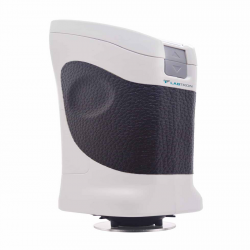
| Illumination: | Di / 8 (diffusion illumination, 8° viewing), SCI |
| Size of integrated sphere: | 40 mm, avian diffused reflection surface coating |
| Illumination light source: | CLED |
| Sensor: | Sensor array |